SUSTAINABLE FOOD PARKS
Nurturing Health and Nature with Village Food Parks
Our Mission
To improve rural nutrition, enhance biodiversity, and boost local livelihoods through the establishment of fruit-based food parks.
What Are Village Food Parks?
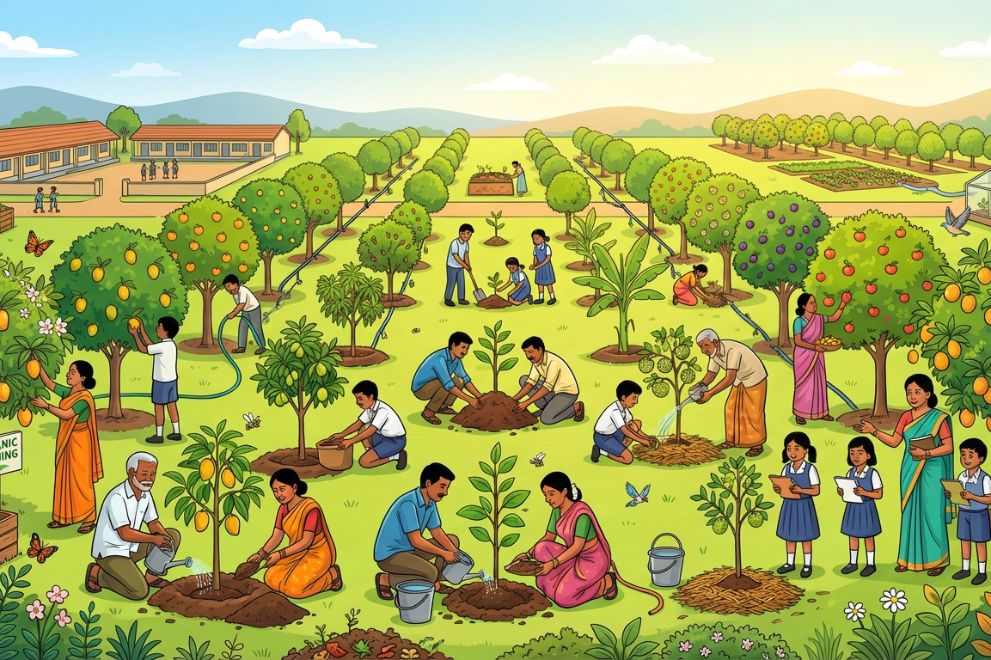
Village Food Parks are community orchards planted with a variety of seasonal fruits such as mango, guava, jamun, custard apple, amla, banana, and drumstick. These green corridors serve multiple purposes: they provide nutritious fruits to villagers and local wildlife, improve air quality by increasing oxygen levels, and act as natural carbon sinks by storing carbon.
Benefits
- Addresses malnutrition and food insecurity in rural areas
- Supports biodiversity by attracting birds and pollinators
- Creates natural carbon sinks improving local climate
- Offers shade and enhances landscape beauty
- Generates eco-tourism opportunities and educational experiences for local communities
How to Implement
- Identify and utilize barren lands, school backyards, or unused community spaces for planting
- Engage local Self-Help Groups (SHGs), farmers, school students, and community members for collective ownership and maintenance
- Create a monthly fruit calendar to track harvest seasons and maximize nutritional benefits
- Promote awareness on the importance of biodiversity and nutrition through educational programs
Who Can Get Involved
Rural communities, schools, farmers, SHGs, NGOs, and local government bodies can all collaborate to establish and maintain these food parks, fostering a shared commitment to nutrition and sustainability.
Why It Matters
By harnessing the power of local fruit trees, Village Food Parks help combat malnutrition, increase biodiversity, and empower rural communities economically and environmentally—building healthier, more resilient villages for the future.