SEEDS & SUSTAINABILITY
Plant Today, Protect Tomorrow
Our Mission
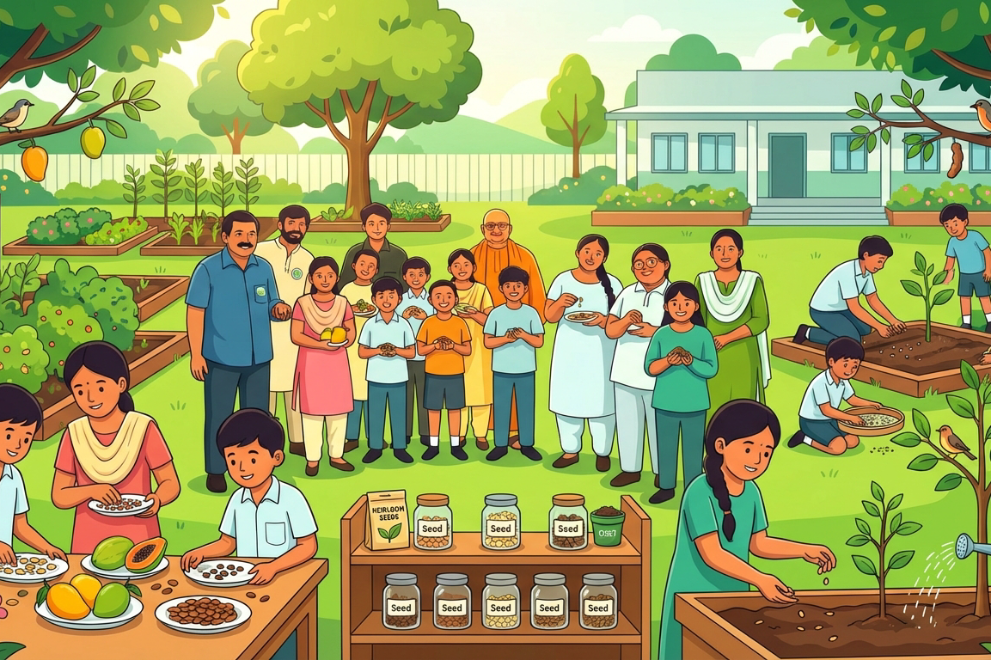
To cultivate a culture of seed conservation and natural regeneration by encouraging children and youth to actively plant seeds from the daily fruits they consume in schools and communities.
Program Overview
This initiative promotes the simple principle of “What you eat, you plant.” Students and community members collect seeds from everyday fruits such as mango, guava, papaya, and tamarind, and plant them in school gardens, open spaces, and nearby surroundings to support greening and biodiversity.
Key Features
- Collection and planting of locally available fruit seeds
- Creation of small seed banks in schools and communities
- Hands-on environmental learning for children and youth
- Promotion of tree plantation and natural regeneration
- Integration of nature-based values into daily life
How to Get Started
- Organize programs like “Seed Sundays” or “One Fruit = One Tree”
- Set up a simple seed collection and storage system in schools
- Identify suitable planting areas within campuses or neighborhoods
- Involve teachers, eco-clubs, and local volunteers for guidance
- Monitor sapling growth and maintain planted areas regularly
Educational Value
The program helps children understand plant life cycles, biodiversity, and the importance of trees, while building responsibility, patience, and care for the environment through practical learning.. The process also nurtures values such as responsibility, patience, teamwork, and respect for nature, making environmental education meaningful and long-lasting.
Community Impact
By involving families, schools, and local groups, the initiative strengthens community participation in afforestation and promotes shared responsibility for creating greener living spaces.Over time, these efforts contribute to increased green cover, improved local environments, and greater awareness of sustainable living practices.
Ideal For
Schools, eco-clubs, youth groups, community organizations, and residential societies looking to promote environmental awareness, tree planting, and sustainable habits among children and young people.It is especially effective for institutions and communities seeking low-cost, scalable, and impactful ways to promote tree planting, biodiversity conservation, and lifelong sustainable habits among children and young people.
Why It Matters
This initiative strengthens biodiversity, improves green cover, and fosters environmental responsibility from a young age. By connecting daily food habits with tree plantation, it builds awareness about conservation, food security, and the importance of nurturing nature for future generations.